Interviews
I realized that technical skill is often confused with expression, making interviews great opportunities. Some are surprised that I prefer using scissors over a cutter, and even more perplexed when I confirm that drawing is often better avoided; it wastes time and diminishes the expression.
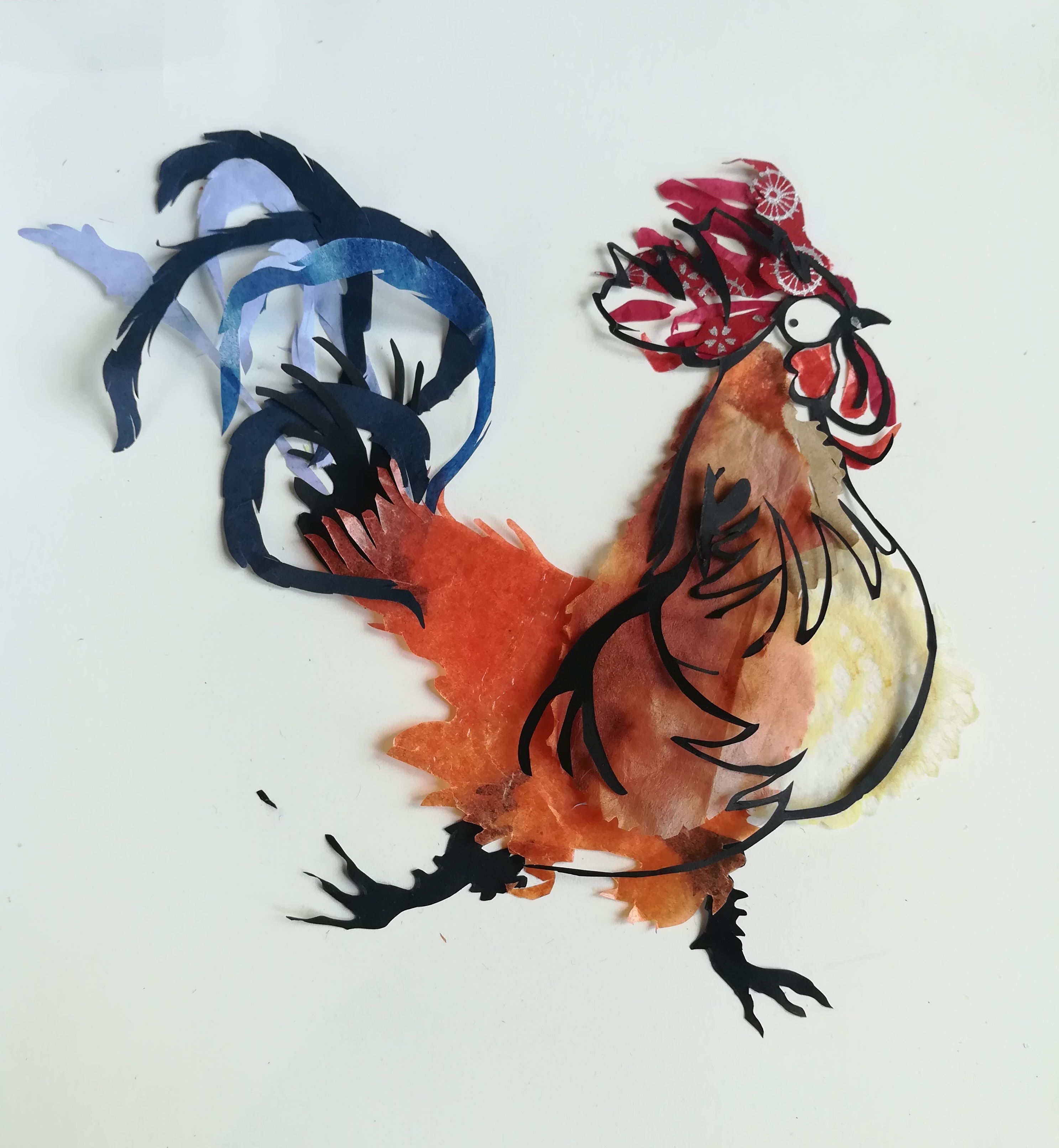
Paper cut-out has the unique quality of being a direct and spontaneous expression for those who practice it. It offers immediate satisfaction and, in the past, was so commonly used in everyday life that it went unnoticed. I believe this is one of the reasons it is not well known as an artistic expression and practice.
Perhaps this is why there is still so much curiosity about my expressive world, leading to these interviews.
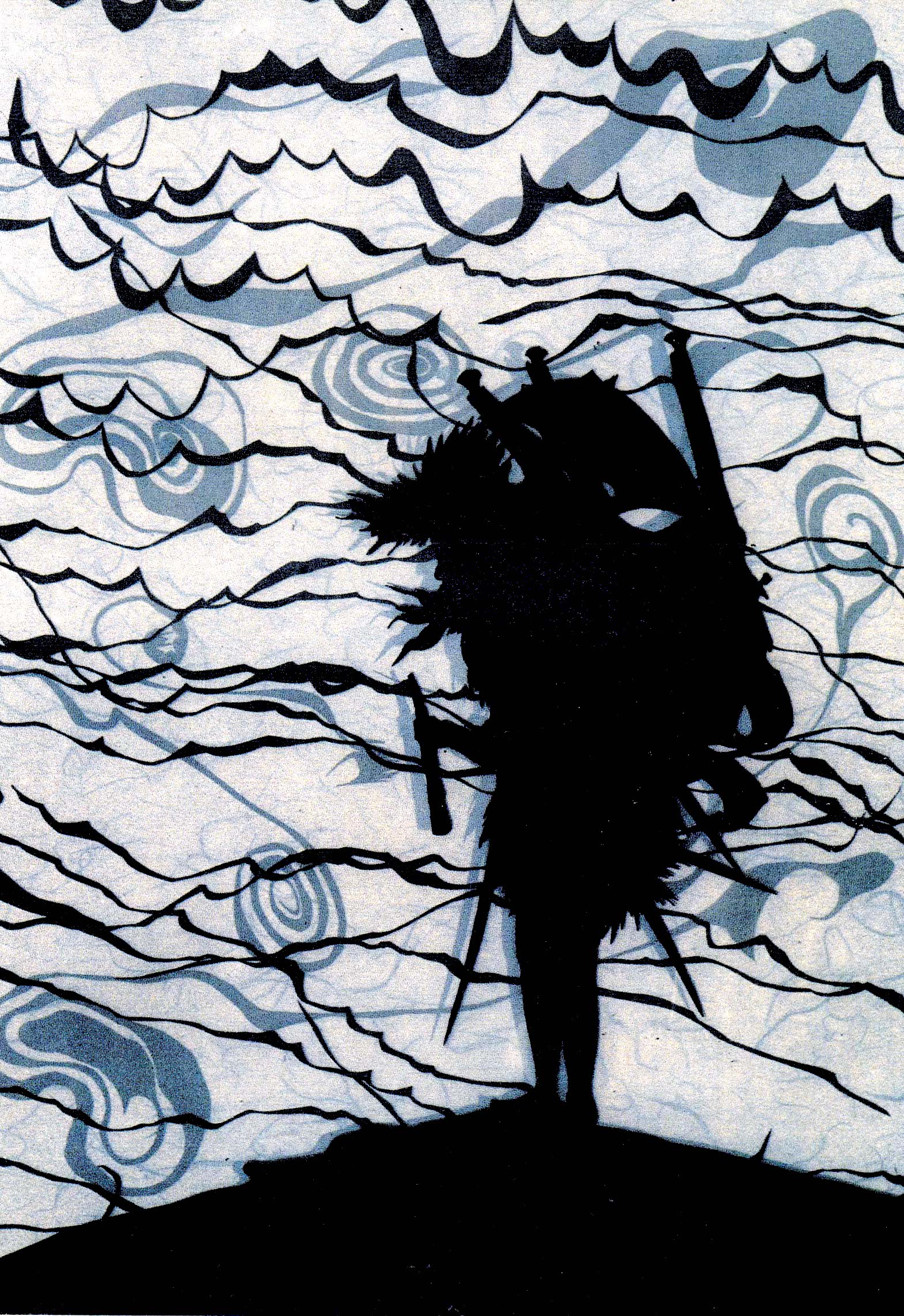
Measchair – Silvia Geroldi
“How does a technique so closely tied to the physicality of paper reconcile with an increasingly digital world? Why worry about the digital age when paper cut-out art still communicates enchantment? It is a sensitivity, not just a technique. There was the same fear when photography was born, both for painting and theater, yet everything fused and transformed…” 11-11-2013
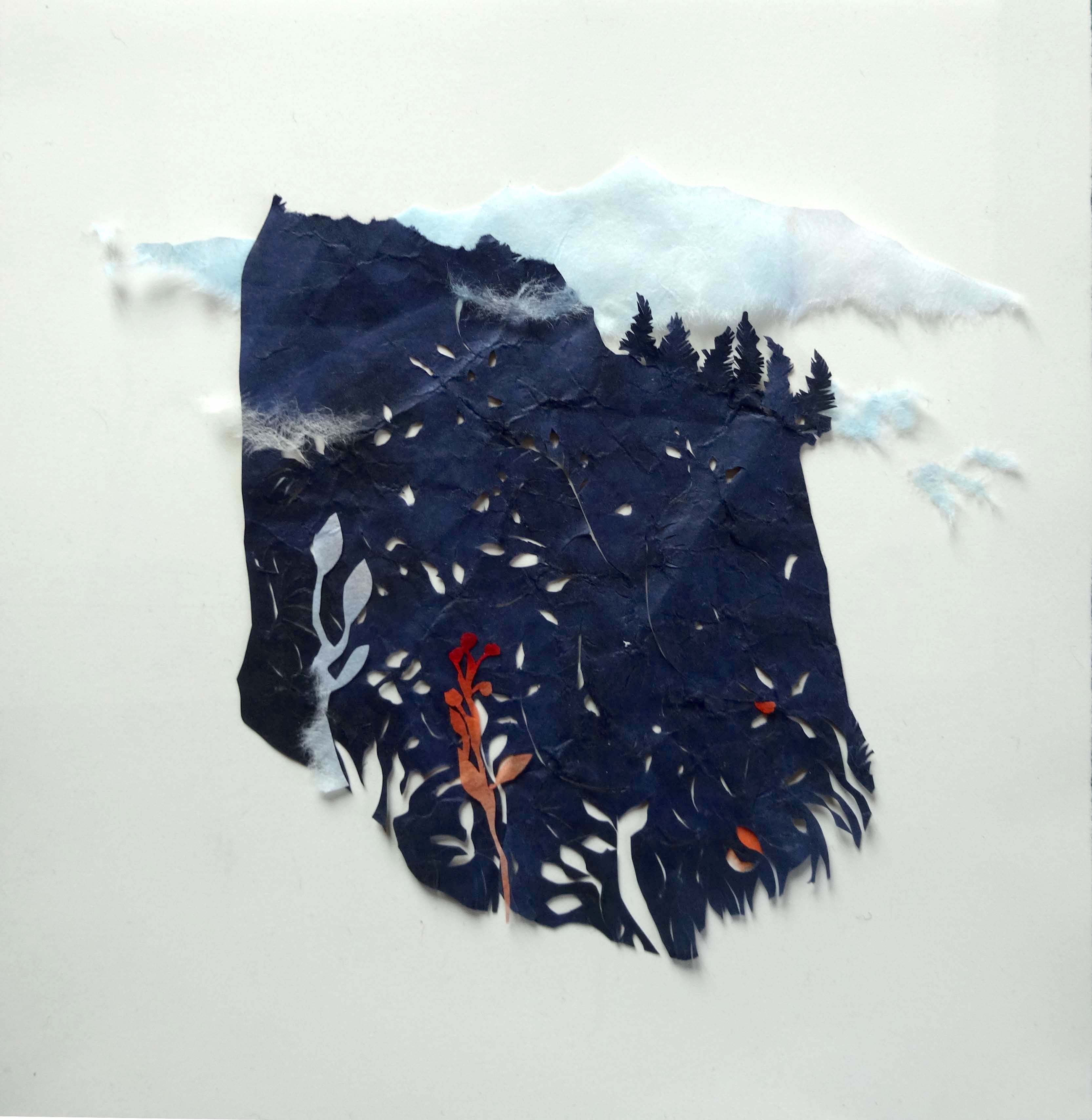
Six Haikus Illustrated by Clementina Mingozzi and Some Reflections
Clementina Mingozzi is a unique illustrator; paper is her delicate instrument of expression.
“Although it was perfectly congenial to me from an interpretative standpoint, it was helpful to know that he was an elderly wandering monk, reflecting on the pursuit of his life’s goal. Otherwise, I would have given less importance to the rocks and brambles in the foreground….” 5-5-2014
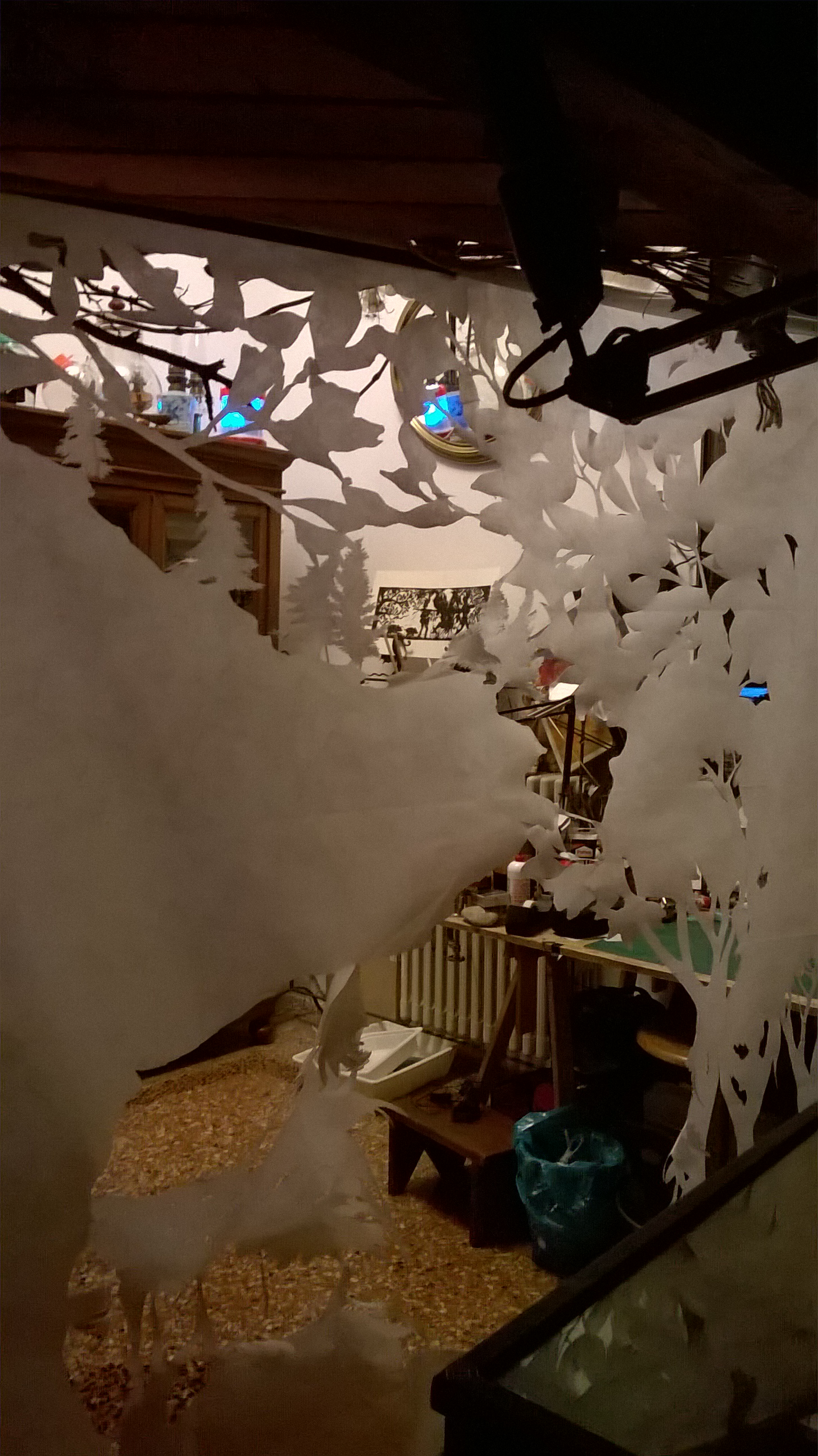
Clementina Mingozzi: The Allure of Shadow and the Boundary of Light – Il Bianco ed il Nero. Interviste
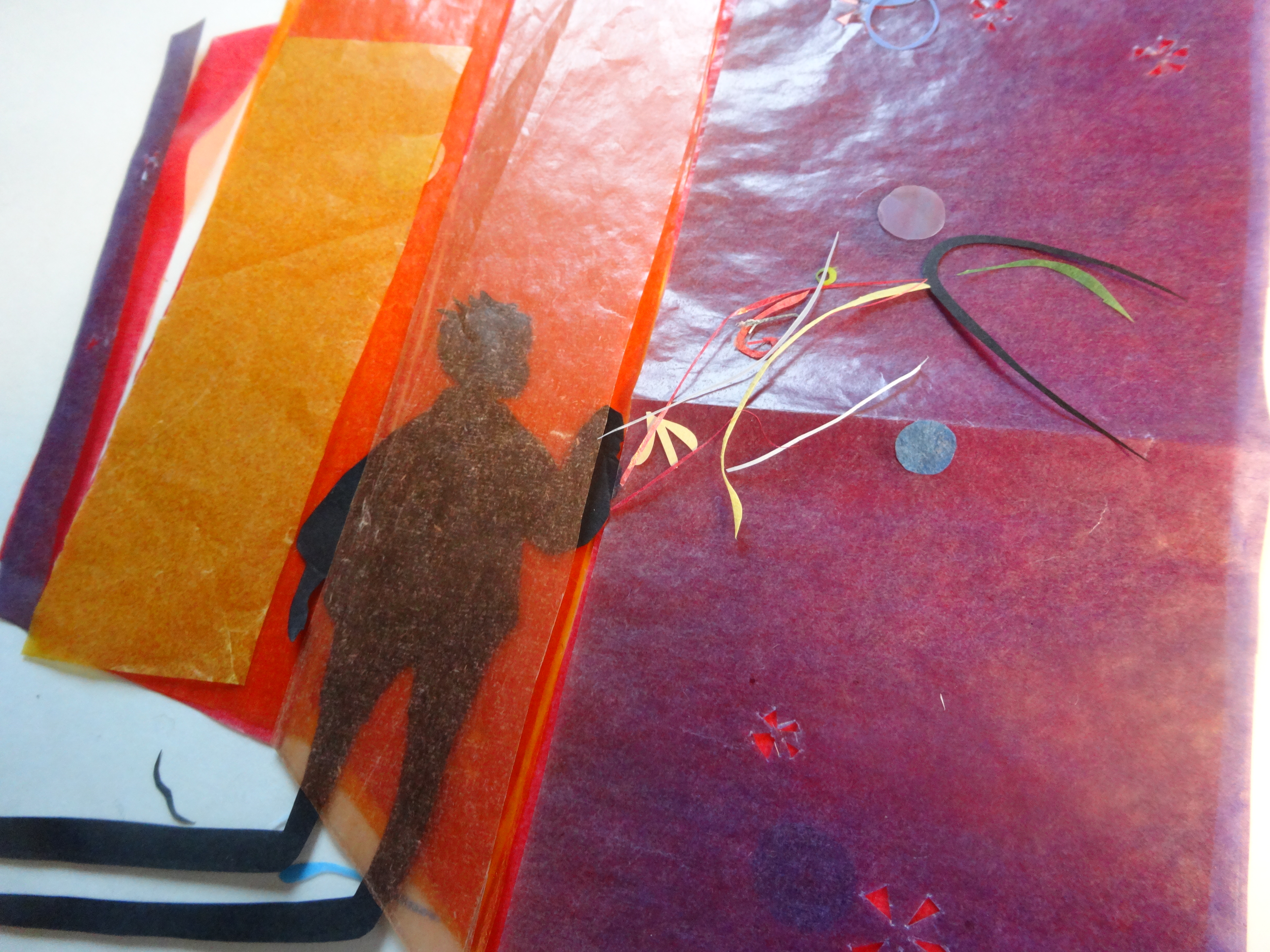
“”…For a paper cut-out artist, the preference for black paper on a white background is almost a given; our brain suggests it, as it remains etched in memory for its simplicity of reading. It becomes a limitation if one wishes to use color for any reason…” 18-1-2016
From the Conversation with Maria Gioia Tavoni
“So, in your early experiments, you didn’t yet know which path you would follow. With today’s perspective, where do you recognize the turning point that helped you mature and reach your current levels of creativity and success?
– For many years, I felt quite scattered. Only now, with over thirty years of research behind me, do I realize that everything was leading me towards my natural expression…” 28-12-2018
He Who Knows More Sees Further
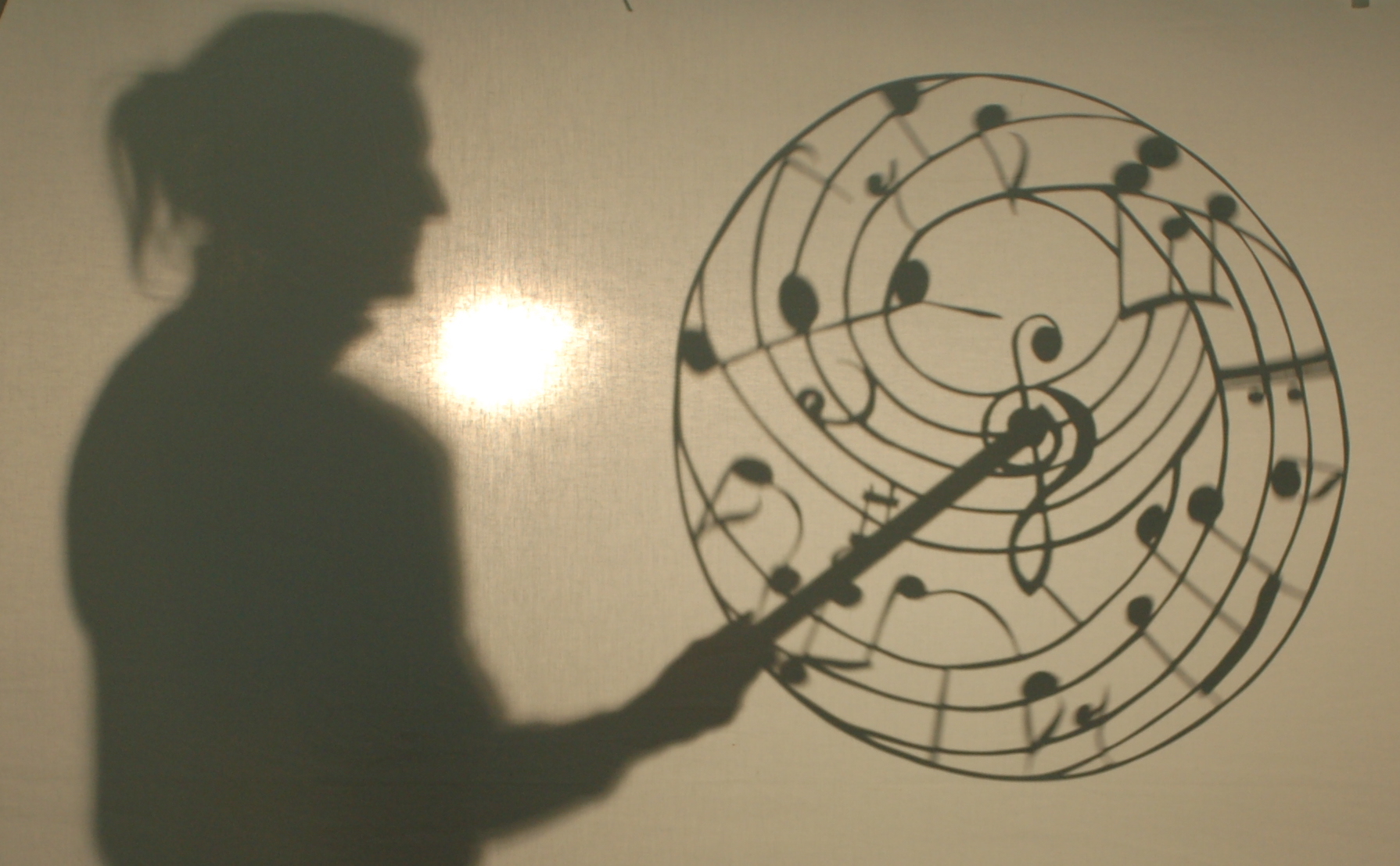
“…However, there was a difficulty; I couldn’t explain simply what I was doing. There was a missing word to serve as a container, or at least, that’s what I thought. So I decided that ‘Papirografia [paper cut-out art]’ was the right word. It took a certain boldness to start reviving it! I delved into the world of children’s publishing, and over time, despite thinking of myself as shy, I instinctively and determinedly created silhouette shadow plays. I involved, as needed, technicians, actors, and musicians…” 27-8-2019
Press
I really love books. Sometimes I come across texts in the form of stories, more often in the form of poems. Sometimes illustrations are born, other times the images need to break free from the white light of the page. In my mind, they have shadows; I imagine puppets acting in their own space from the very beginning.
One day, I sent some illustrations to a collector experienced in cut-outs, who told me that my works contained continuous movement. I was delighted and thought, ‘They are born with the nature of a sketch, they acquire a shadow, they do not betray themselves even in print, they keep running!’ When I recognize a path that connects me to others’ experiences, I understand that I will also discover more about myself.
I take notes, collecting testimonies from the history of Papyrography, including from artists of past centuries. Finding traces, pieces of roots filtered through direct experience is exhilarating
Poesie per Aria
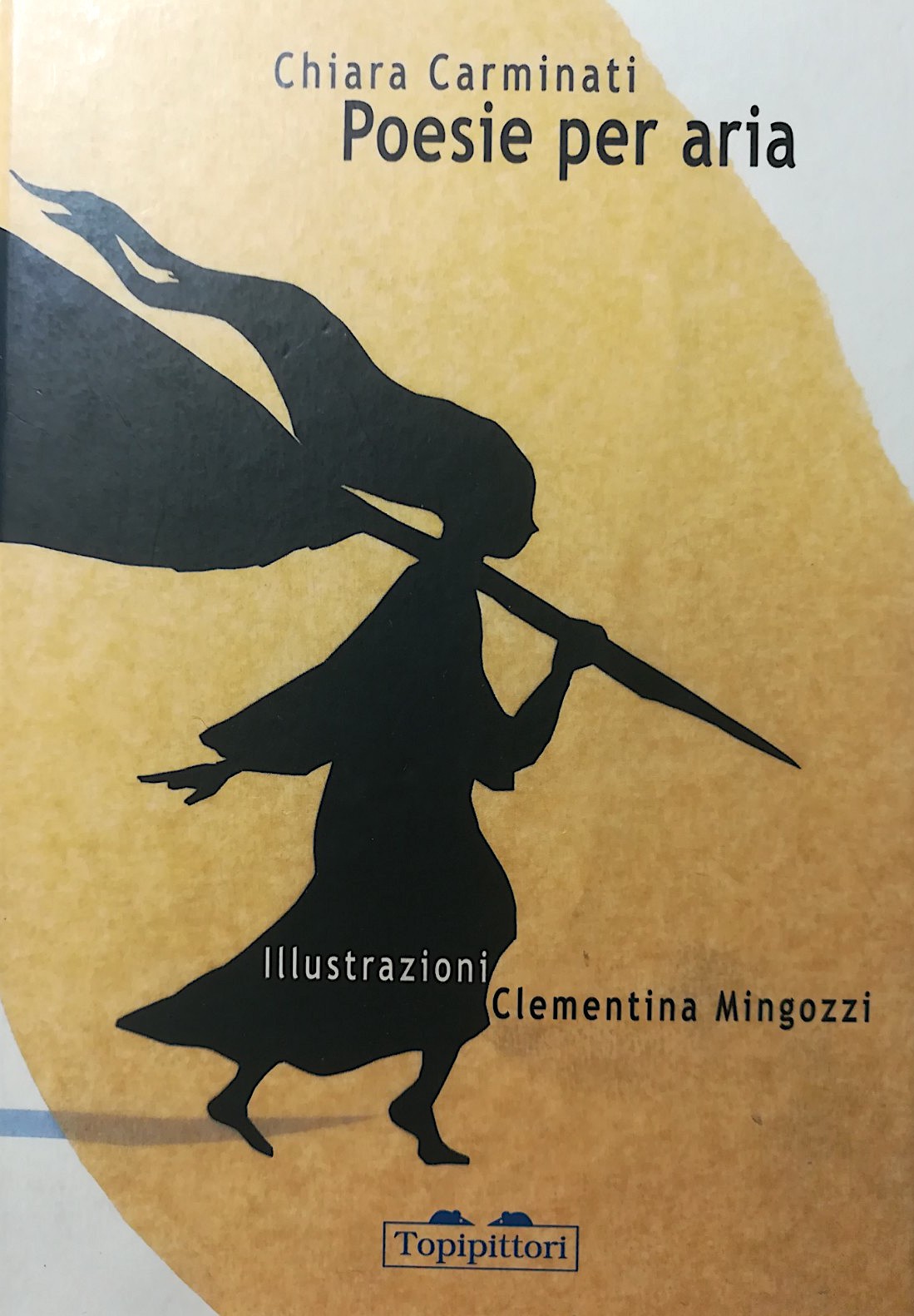
Chiara Carminati and Clementina Mingozzi. Topipittori, 2009; Second Edition 2020.
“…The quality of the texts and images that has ensured the longevity of this collection is the reason we decided to reissue it, this time in our economical edition. Additionally, this book, as often happens with many others in our catalog, has managed to establish itself and attract readers over time. This is confirmed by its current recommendation by booksellers and librarians, as well as its promotion in numerous bibliographies and various school anthologies.”
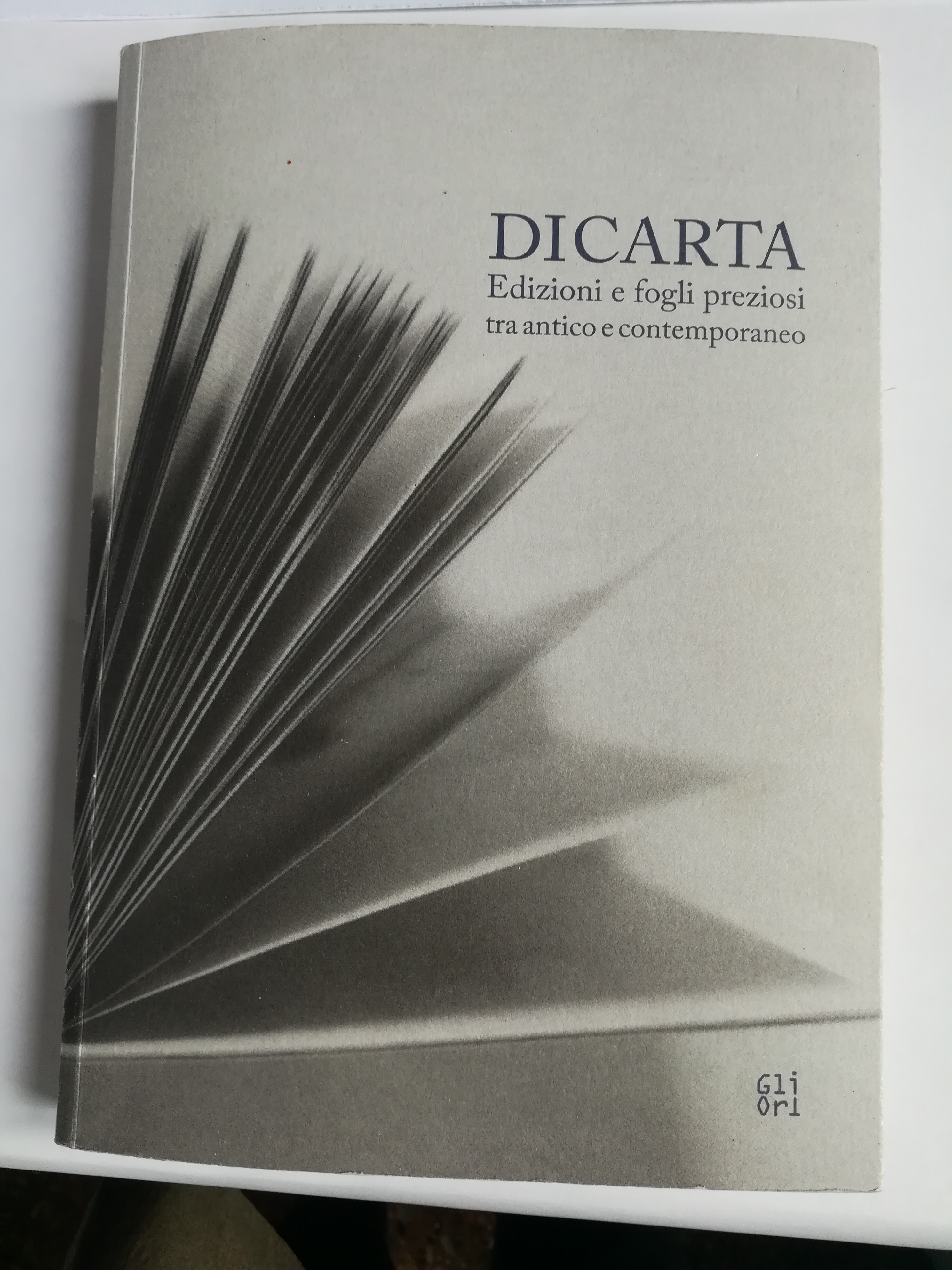
Of Paper: Precious Editions and Sheets from Ancient to Contemporary
Curated by Pierluca Nardoni and Maria Gioia Tavoni. Gli Ori, Pistoia, 2018.
“…This is what happens in the first section dedicated to animated paper, where Clementina Mingozzi’s ‘papirografie’—heirs of the silhouette cutting tradition—are featured. From peasant folklore, the silhouette evolved through the early cinema to be adopted in the early 20th century by artists like Lotte Reiniger, who introduced its archaic forms into her animated films…” Pierluca Nardoni
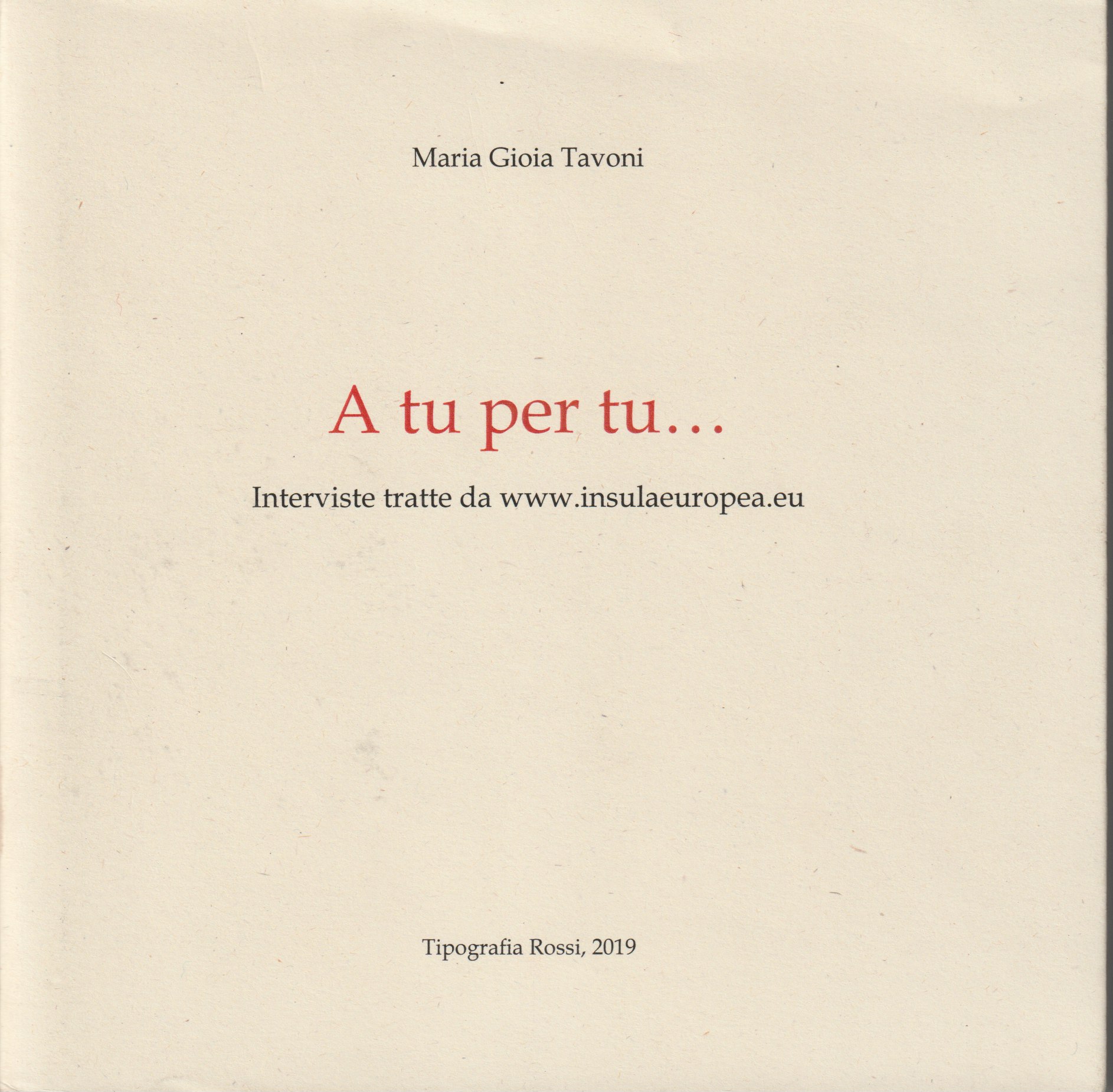
Face to Face… Interviews from www.insulaeuropea.eu
Maria Gioia Tavoni. Tipografia Rossi, 2019.
“…Paper cut-out art is recognized as a technique with ancient roots in European folklore. It developed into an art form with the 18th-century fashion for silhouettes and masters such as Ercole Livizzani (1795-1874), who, though unknown to most, was esteemed by figures like Canova and Leopoldo Cicognara. With Matisse’s papiers découpés, we see cut-out shapes soaring in space, ushering us into the 20th century.”
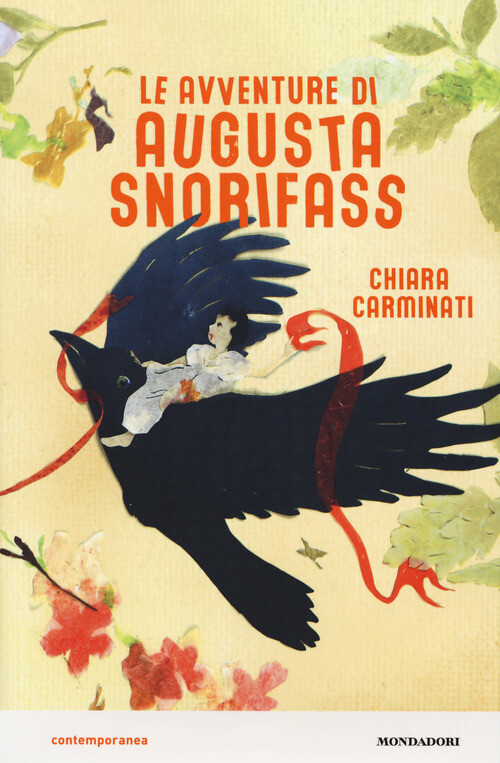
The Adventures of Augusta Snorifass
Chiara Carminati. Mondadori, Contemporary Series, 2018.
“…The idea of entrusting the images to an artist who creates wonders with paper and paper cutting is truly brilliant. Clementina Mingozzi indeed makes Augusta, her wardrobe, and her friends come to life theatrically and tangibly. Paradoxically, the images almost transform into real snapshots…” Maria Polita
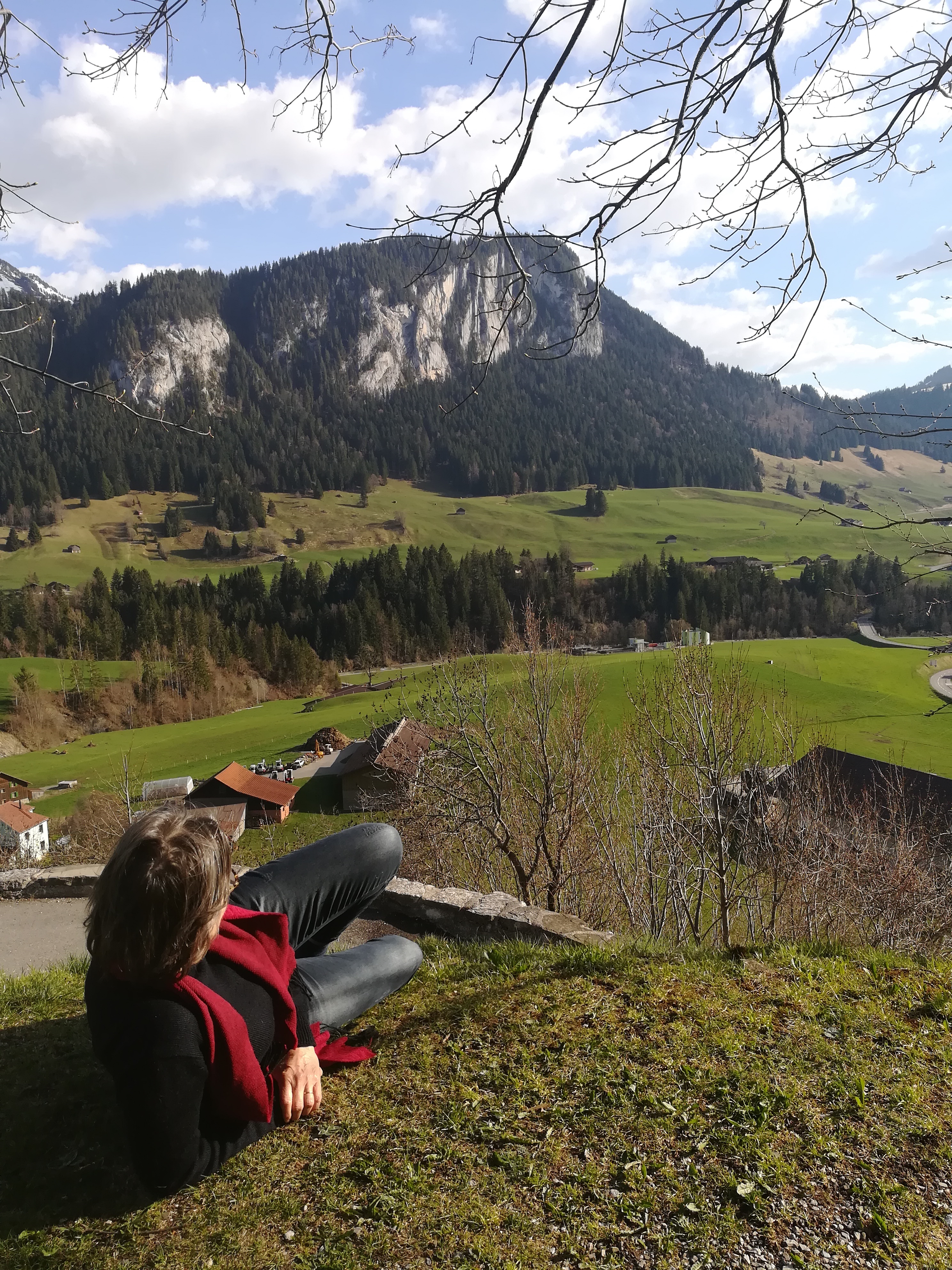
Ecce Humus!
The Extraordinary Experience of Jean-Jacob Hauswirth, Paper cut-out art artist. Published on the Topipittori blog, September 14, 2018 – Paolo Canton
“What would I have discovered anew about Hauswirth’s creations displayed at the Château-d’Oex museum, which I had decided to visit? Would I have gained a deeper understanding of my own roots as a ‘papiromaniac’ by visiting these places, only 107 km apart in a straight line?
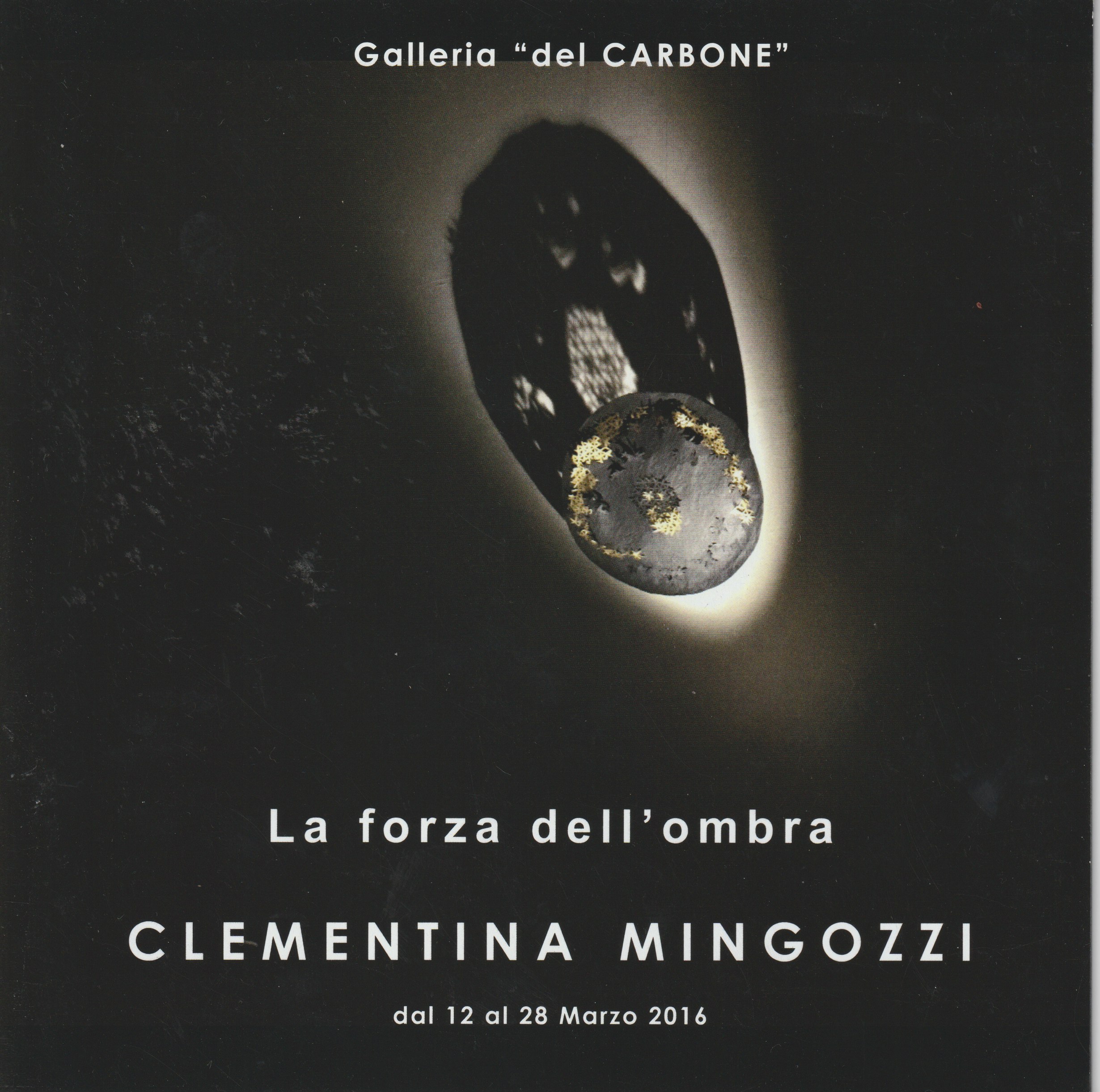
Clementina Mingozzi: The Power of Shadow
Galleria “del Carbone,” catalog in collaboration with Associazione Bondeno Cultura, 2016.
“…The Haiku is like a drop of water that reflects the entire landscape and the sky above me!” Clementina is captivated by the essence… which pertains to the relationship between an event and its representation. She is similarly drawn to shadow theater, where ‘simple’ silhouettes backlit recreate proximities and distances, alluded depths that are simultaneously amplified, echoing passions and joys, real feelings experienced.” Lucia Boni
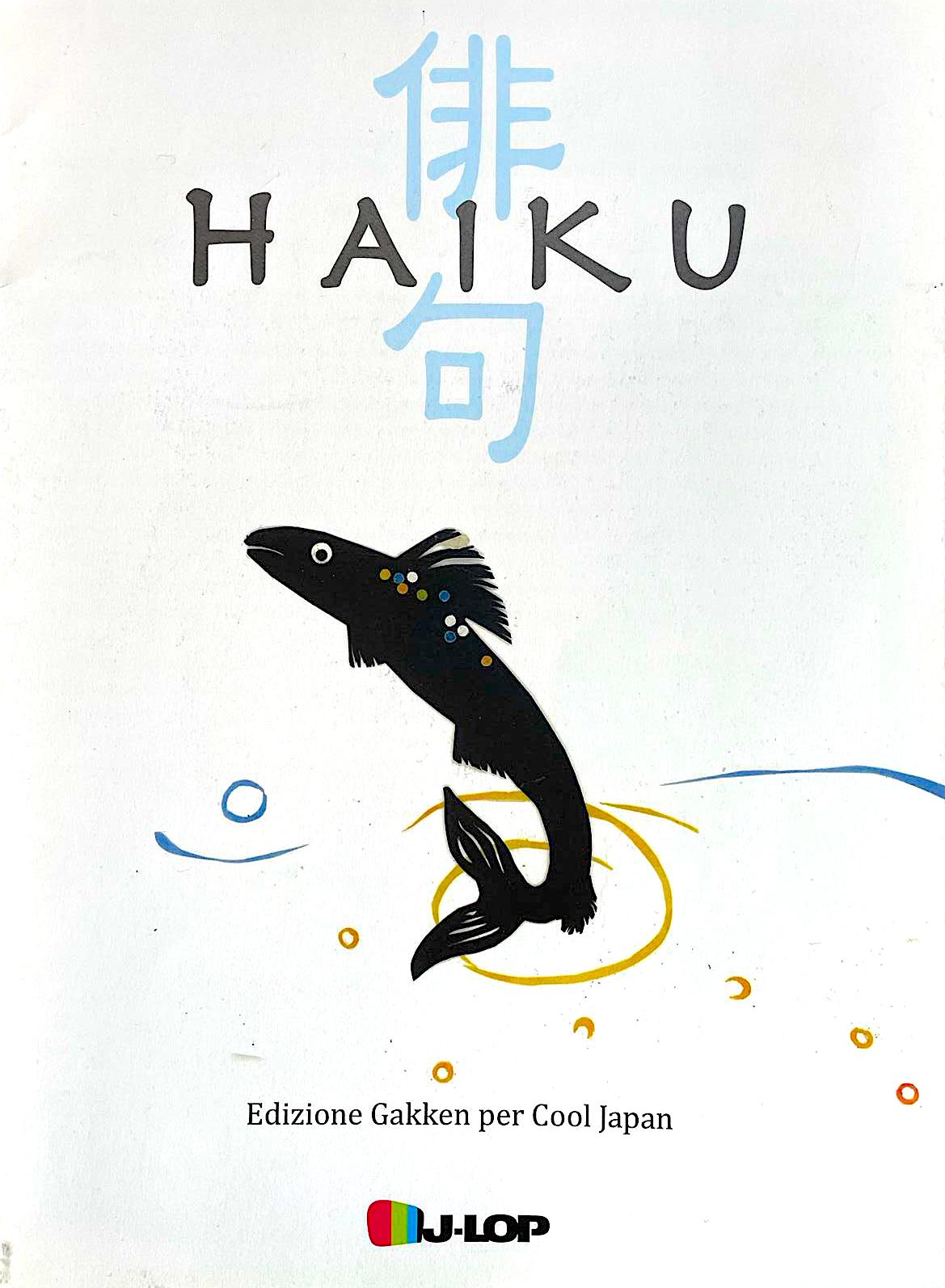
Haiku.
Gakken Edition for Cool Japan, 2015.
“…Since last year, we have admired her illustrated haikus, which have generated great interest among the public. Clementina’s work has continued, and the result is astonishing, filled with modern grace. The composition, color, and movement make her pages perfect…” Grazia Gotti
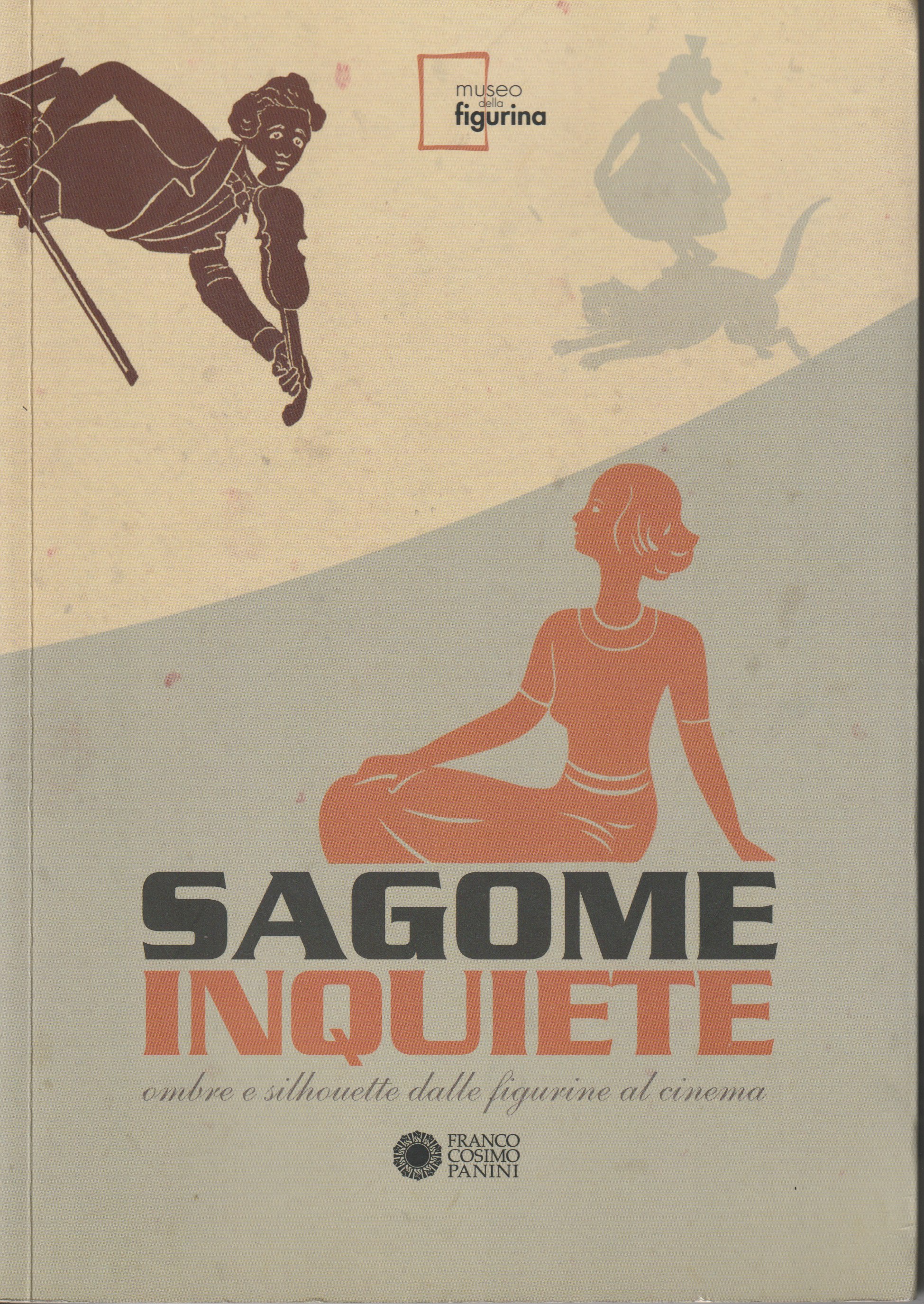
Restless Silhouettes: Shadows and Figures
From Figurines to Cinema Museo della Figurina. Franco Cosimo Panini Edizioni, 2011.
A playful and mysterious journey, one step in a figurine, the other in a wax seal. Clementina Mingozzi, paper cut-out artist and illustrator, who has made shadows the central theme of her artistic journey, reinvents for the public some images and objects on display by designing, creating, and sometimes reconstructing four highly evocative installations. These installations invite visitors to interact with shadows: the ‘restless silhouettes.’ They are not only depicted but tangible in their intangibility…?
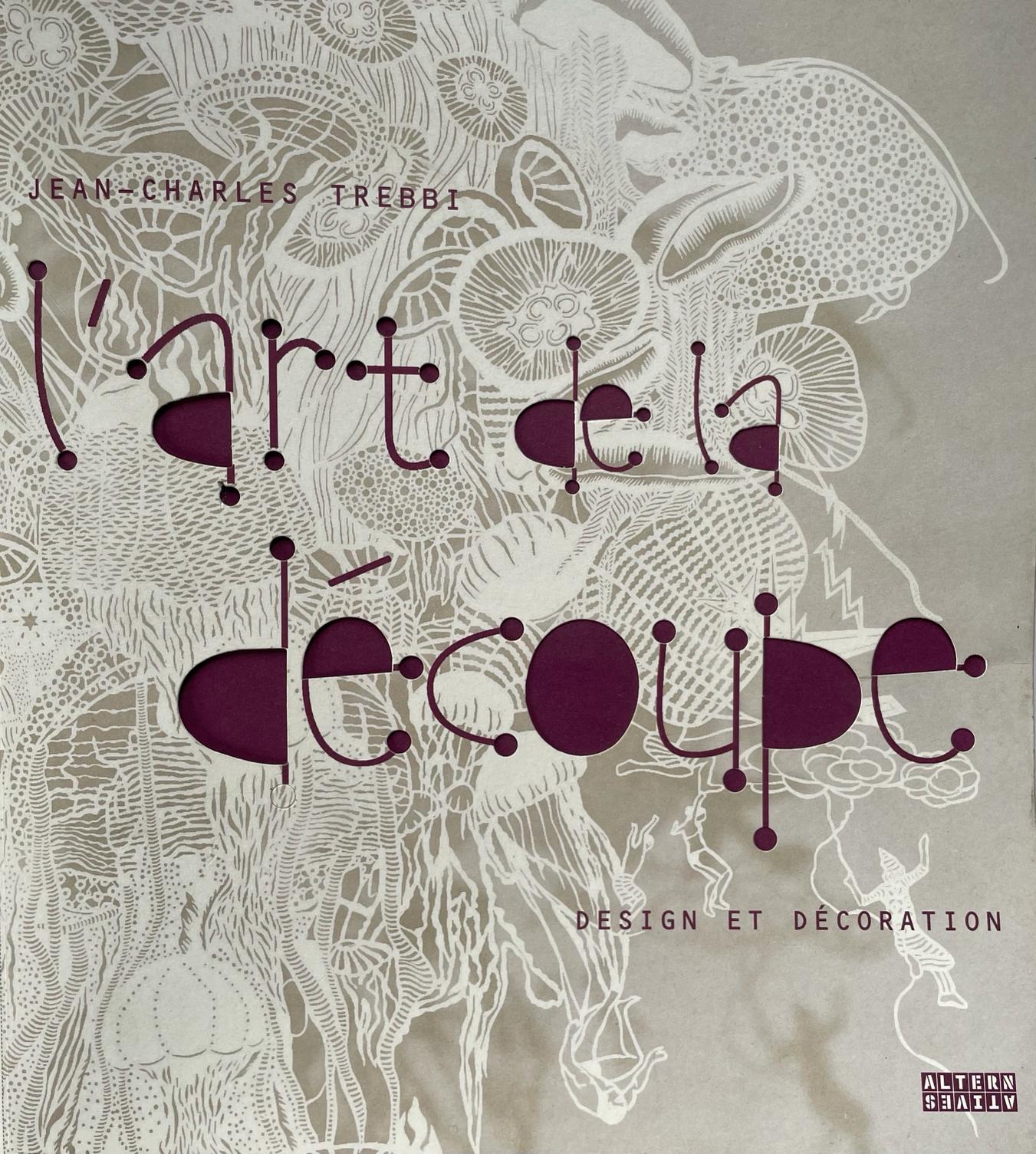
The Art of Cutting
Jean-Charles Trebbi, Éditions Alternative, Paris, 2010.
“…In Paperi e Papiri, I used a mix of silhouettes and cut-outs, and it was at that moment that I started using the term ‘papirografia’ again. Indeed, the use we made of the cut-outs was playful and performative… The set was built step by step with the progression of the scenes; burdock leaves, ducks, and eggs were added… the stagehand was on stage.”
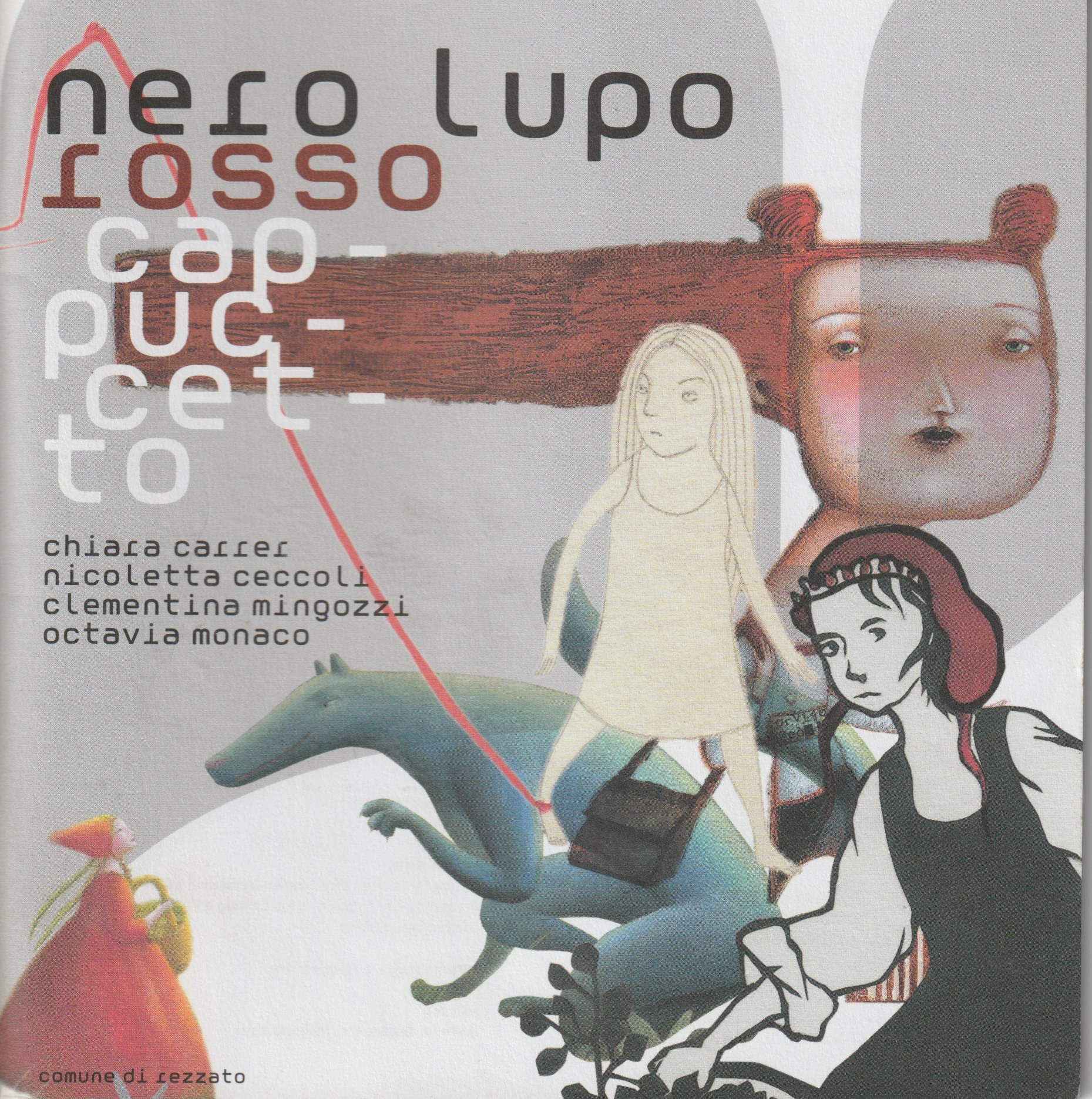
Black Wolf, Red Riding Hood
Chiara Carrer, Nicoletta Ceccoli, Clementina Mingozzi, Octavia Monaco. Exhibition catalog curated by Biblioteca Sala Borsa Ragazzi, Comune di Rezzato, Comune di Bologna, 2005.
“…Clementina Mingozzi employs the ancient art of paper cutting to offer a faithful and marvelous interpretation of Perrault’s Chaperon Rouge, ‘a kind of dramatic game to scare younger children,’ writes Perrault (and ‘to teach them to defend themselves from fear,’ adds Calvino). To the complex tradition of silhouettes, which has seen a renewed interest thanks to Michel Ocelot, Clementina adds the delicacy of the refined combination of different papers.” Tiziana Roversi

Illustrating Little Red Riding Hood
For the children of the Republic of San Marino during the exhibition, Secretaria di Stato Istruzione e Cultura, Centro di Documentazione della Scuola Elementare, 2004
“The version of Little Red Riding Hood that I liked the most is Charles Perrault’s, because it ends with ‘the devouring’ of a little girl. And I dislike little girls because they are mischievous, greedy, indifferent, and vain, which is why I like the story. The illustrations by Clementina Mingozzi, in my opinion, depict Charles Perrault’s text to the letter, using two fundamental colors: black and white. Charles Perrault’s fairy tale is the most beautiful.” Lorenzo
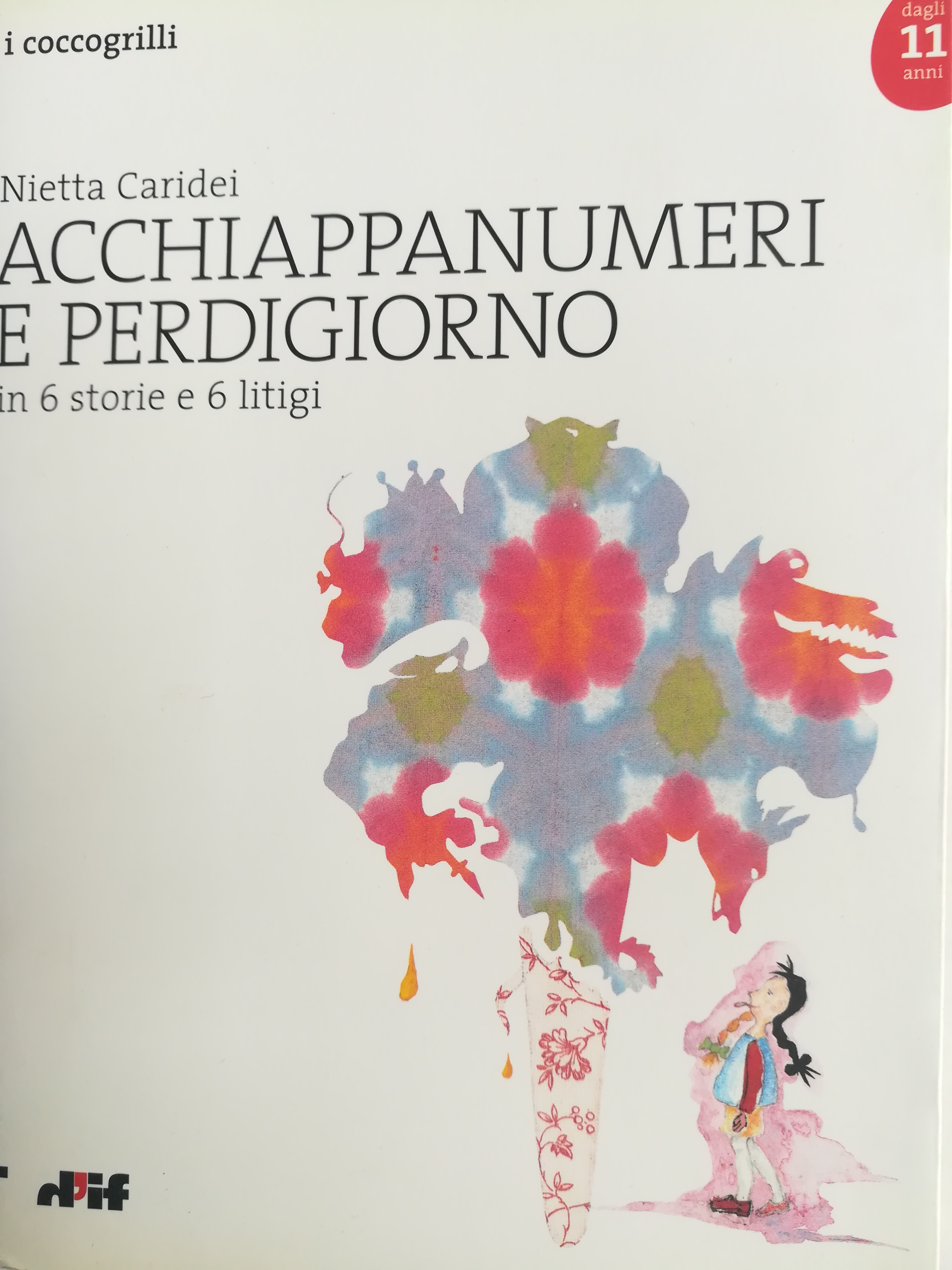
Acchiappa numeri e Perdigiorno
D’If edition, I Coccogrilli, 2016.
Colorful stories and rhyming quarrels, strange mishaps and mismatched objects come together breathlessly in a puzzle of words, dreams, and images.
 CLEMENTINA MINGOZZI