Exhibitions
As a child, I was shy, and speaking in public paralyzed me. After several years of artistic exploration, my first public engagements came through requests for cutting demonstrations and workshops. These moments disoriented me and left me unsatisfied: two hours, or even 48 hours, weren’t enough to teach and learn the dexterity required for cutting, much like playing an instrument or acting, nor to create complete and meaningful works.
I soon realized that I needed to change my approach. I turned public engagements into opportunities to share the creative world I was building, a world where I was the sole author and witness. While developing a technique only requires practice and perseverance, creating a work of art demands a lifetime of dedication, where each step represents an imperfect stage of one’s maturation journey.
Creativity felt like a natural calling, an inherent part of who I am. The beauty The experience of creativity has been a natural calling for me, part of who I am. What I developed in my research represented a wealth that I could share with those around me and with people interested in my work. By accepting to expose myself with all my passion, my shyness vanished. Since then, I have started to share the pleasure.
I discovered that it’s possible to share the joy, beauty, and transformative power of the creative act and the works that represent me, no matter the occasion.
DI CARTA: Editions and Fine Sheets between Ancient and Contemporary.
Officina della Scrittura, Museum of Sign and Writing, Turin.
Exhibition and catalog, 2018 – 2019
On this occasion, I had two exciting opportunities: to showcase my artworks to the eyes of a highly critical audience, alongside the paper-cut works of historical artists Leo Lionni, Giulio Giannini, and Emanuele Luzzati. Secondly, to have my observations published in the catalog, articulating insights gained over the years through direct experience in workshops and reflecting on the historical roots of paper cut-out discovered among the documents collected during that time. “On Paper: Editions and Fine Sheets between Ancient and Contemporary,” Publisher: Gli Ori, 2018.

“When I began studying the counterpart of shadows, light, I was struck by how limited our perception was of their history and relationship”
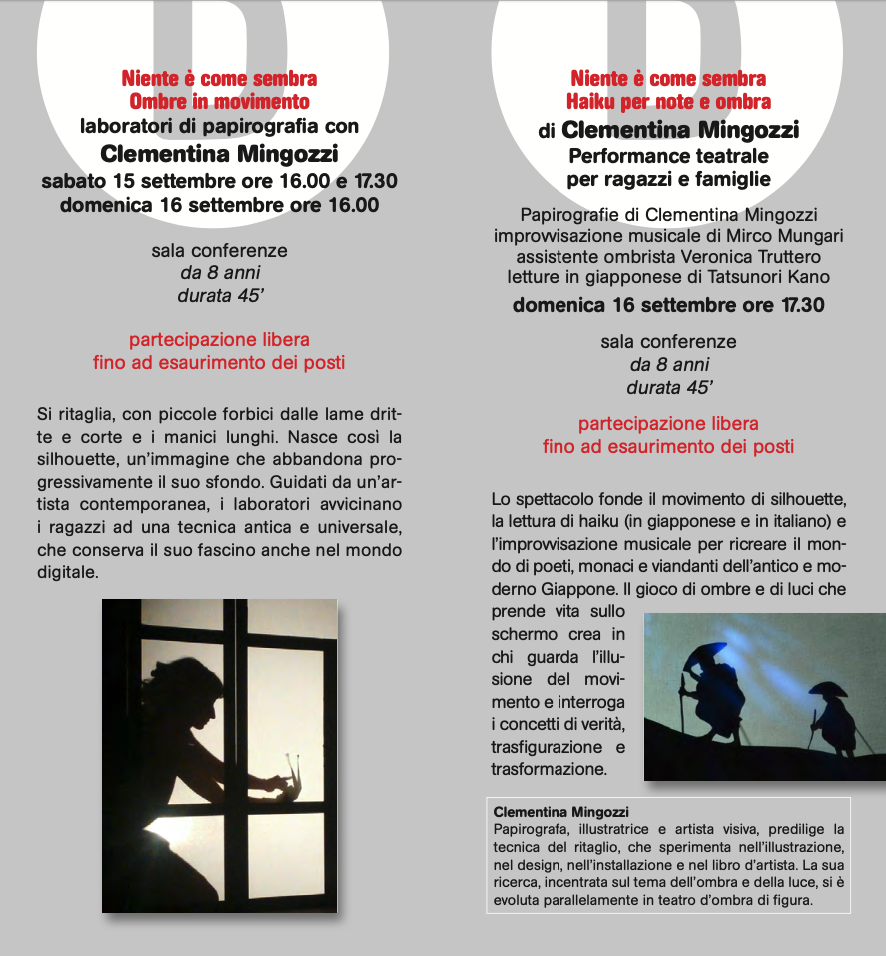
Nothing is as it seems- Shadows in Motion.
Delfini Library for the Festival of Philosophy Truth, 2018.
The occasion of the Philosophy Festival on the theme of Truth provided the perfect opportunity for the combined realization of a workshop with the viewing of a shadow puppet theater show dedicated to Japanese Haiku poetry. It was a pleasure to engage participants, guiding them to act and observe the difference between action and outcome, technique and expression, narration and poetry.
Nothing is as it seems – Haiku for Notes and Shadows.
Delfini Library for the Festival of Philosophy Truth, 2018.
The latest performance, to which I dedicated all my efforts, revolves around the short poetry form, Haiku. It was created in collaboration with a team of four: assistant director and shadow assistant Veronica Truttero, live improvisational music by Mirco Mungari, and live reading by Tatsunori Kano. Personally, I focused on conceptualization, writing, and directing, as well as creating papercuts transformed into marionettes.
For the occasion, I studied text interpretation, consulting with historian Harufumi Yamamoto, and included readings in the original language of the pieces.
Shadows, Silhouettes, Papercuts in the Films of Lotte Reiniger
Cineteca of the Bologna Municipal Cinematheque, 2016.
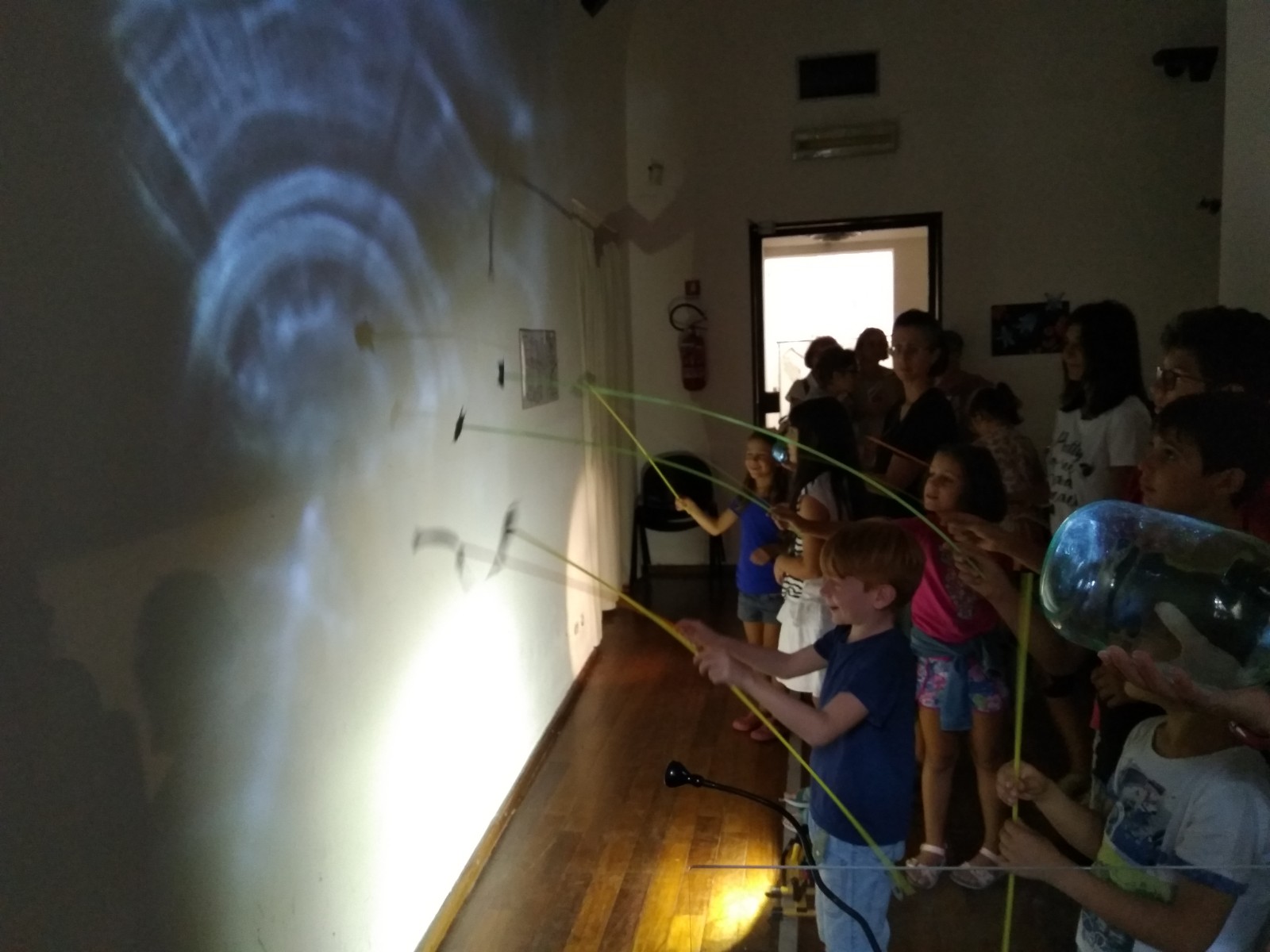
Thanks to the Cinnoteca of the Cineteca di Bologna, I was able to present the theme of papirografia under the auspicious name of Lotte Reiniger. For the occasion, I set up the room with figures to animate.
P.S.: Bologna is the birthplace of Ercole Livizzani (1795-1874), the artist who, in 1822, coined the term “papirografia” for his paper-cutting art. Frequenting print shops during years of lively experimentation, he drew inspiration for the name from the field of lithography.
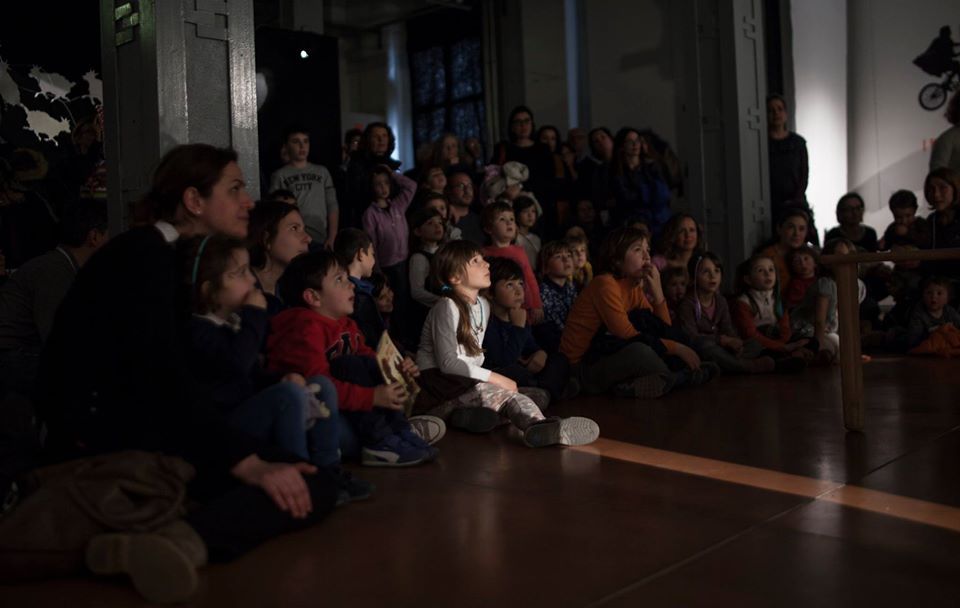
Darkness in the Theater room. Strolling with the Shadow For the Museum Night “Nessun Dorma”
Figurine Museum, 2011.
The entertainment is a walk in the dark that I devised to narrate the history of light through direct experience with various types of light sources. Original pieces from my collection are illuminated at four different stations along the path, accompanied by readings from witnesses of the corresponding era.
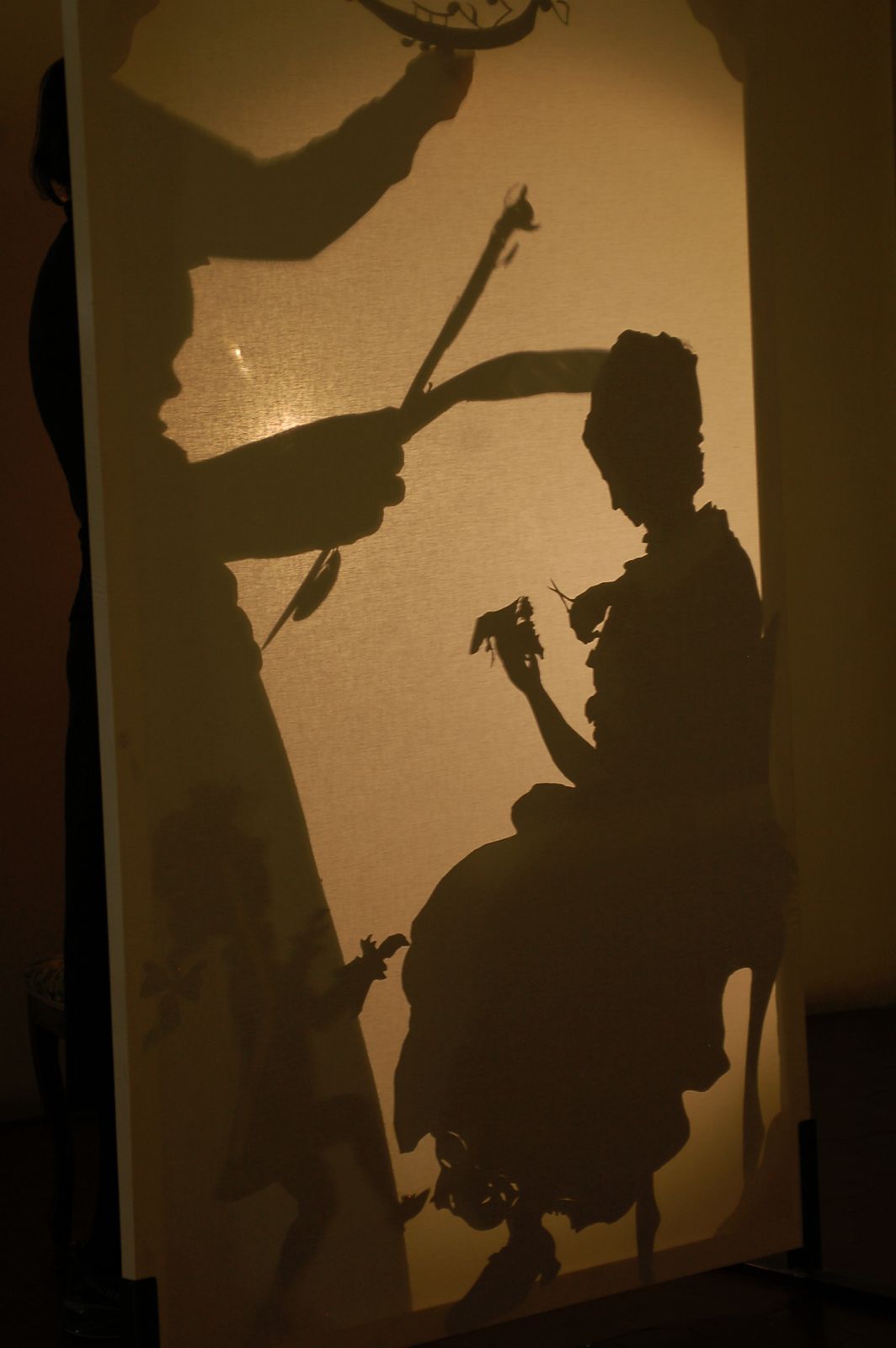
Works in Black
Restless Figures: Shadows and Silhouettes from Figurines to Cinema.
Exhibition at the Figurine Museum of Modena, 2011
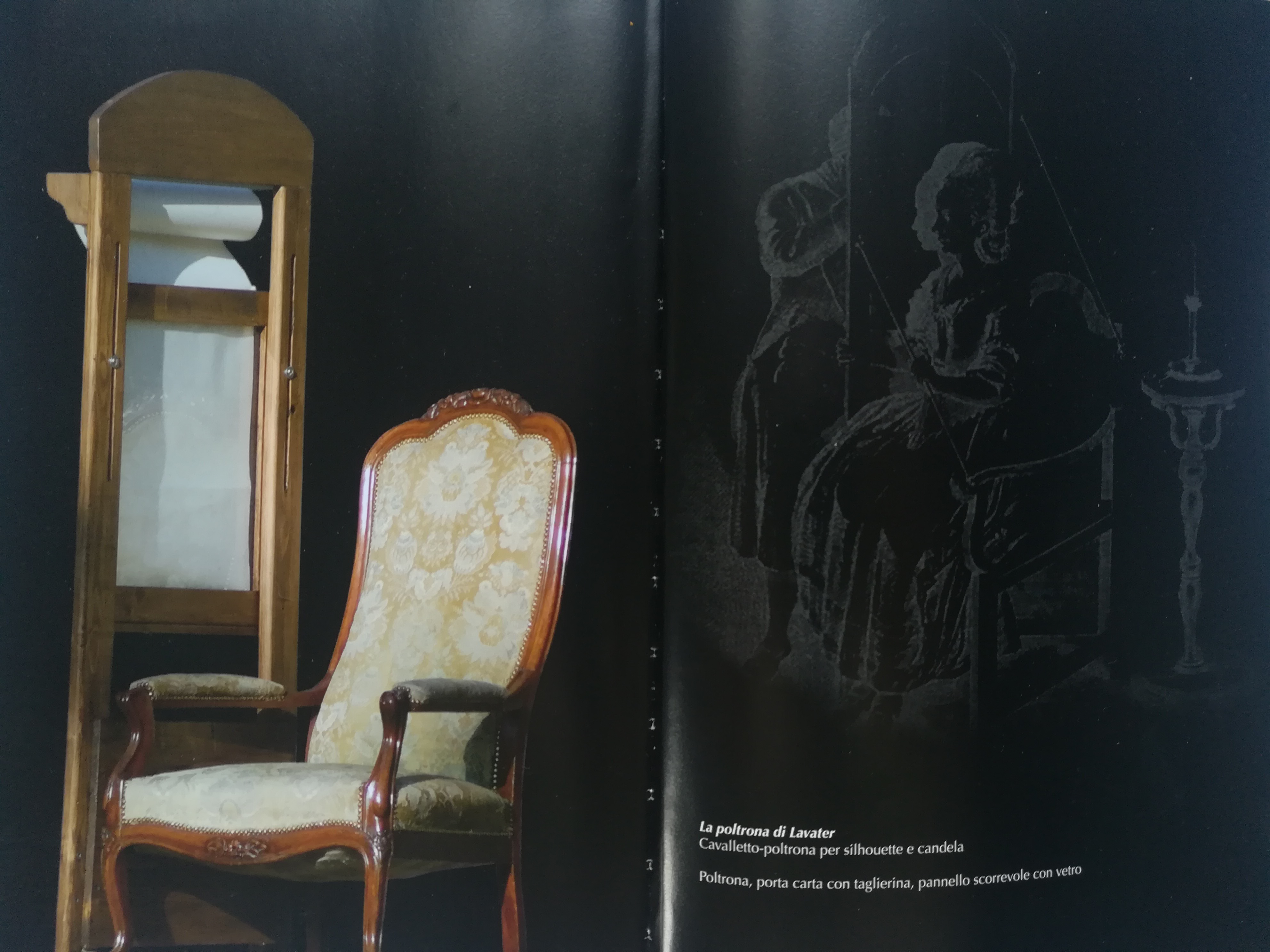
On this occasion, I was tasked with setting up the central part of the museum hall in line with the exhibition on the history of shadows already organized by the museum’s management. The idea I proposed aimed to engage the audience with four interactive stations. One of these stations was Lavater’s chair, reconstructed according to Lavater’s instructions, which allowed visitors to create a portrait by tracing the shadow profile of their visiting companion and take it home as a keepsake.
I am deeply grateful for the wonderful collaboration with the museum staff, whose dedication and meticulous attention ensured the success of every aspect of the exhibition, enabling me to realize the project to the fullest. Together, “Restless Figures” and “Works in Black” received 5,000 visitors during the exhibition period, a significant number for a small city.
As customary for the museum, a catalog was published by Franco Cosimo Panini in 2011.
 CLEMENTINA MINGOZZI